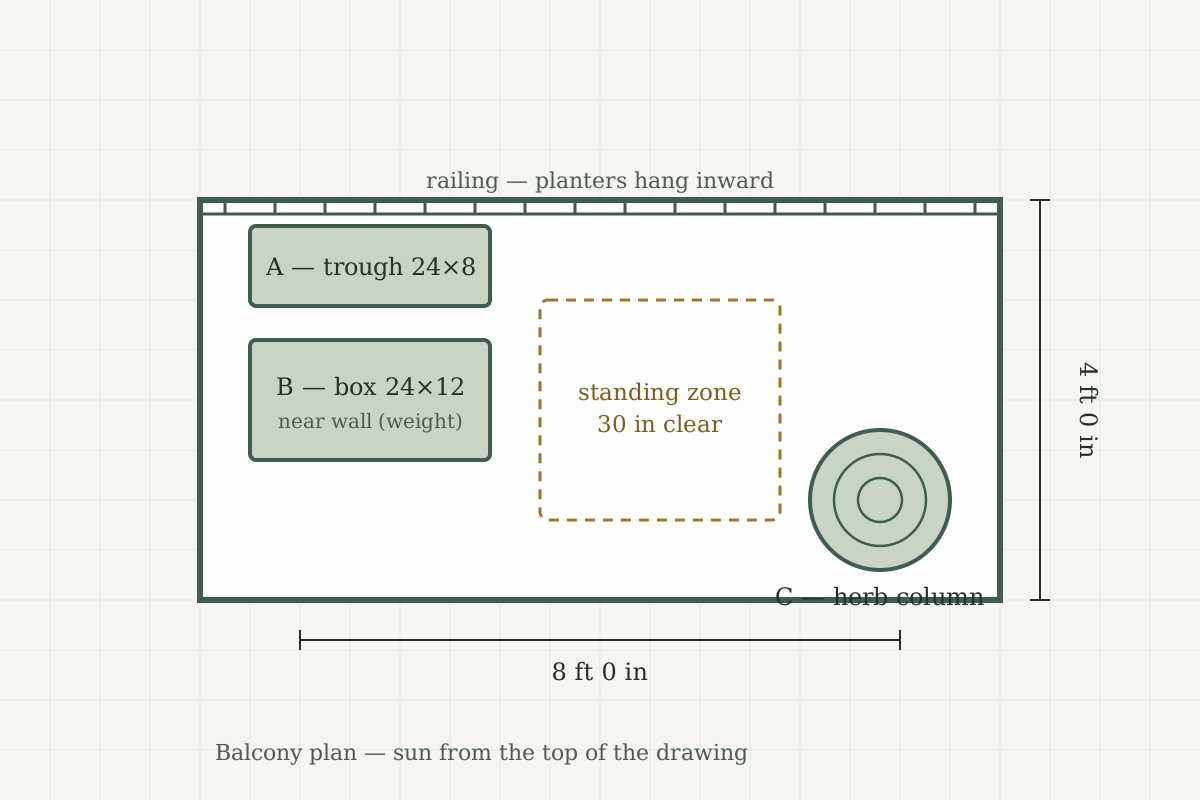
Most balcony gardens die the same death: too many small pots, planted in May, gone by late July. Small pots are the problem — a 6-inch pot in full summer sun can dry out twice a day, and no one waters twice a day for long. This plan uses three larger planters instead of ten small ones, chosen so the soil volume does the resilience work your schedule can't.
It is sized for a 4 × 8 ft (1.2 × 2.4 m) balcony with at least five hours of sun, and leaves you a full 30-inch-wide standing and sitting zone — a garden you can be in, not just look after.
The three planters
| Planter | Size | Where | What goes in it |
|---|---|---|---|
| A — rail trough | 24 × 8 × 8 in | railing, sunniest end | cherry tomato (1 dwarf), basil (2) |
| B — floor box | 24 × 12 × 12 in | floor, sunny side | peppers (2) or bush zucchini (1) |
| C — herb column | 16 in diameter, 3 tiers | shadier corner | mint, parsley, chives, thyme |
Why these sizes: the floor box holds roughly 30 quarts of soil, which buffers a full hot day without wilting; the trough is the smallest container that keeps a tomato alive on a one-watering-a-day schedule; and the herb column puts the cut-and-come-again plants where you can reach them from the door in bare feet.
Weight check before you build: the floor box, wet, approaches 60 lb (27 kg). Any sound balcony handles that easily, but keep heavy planters near the wall or over a support edge, never mid-span — and rail planters must hang inward unless your building explicitly allows outside-hung boxes.
The shopping list
Soil is where the budget goes, and it is the one place not to cheap out: 2.5 cubic feet of quality container mix (not garden soil — it compacts in pots) plus a small bag of slow-release fertilizer. Then: the three planters ($15–70 depending on new vs. secondhand), nine plants as starts rather than seeds for a first season ($25–35), a 2-inch bag of mulch for the soil surface, and a watering can with a rose head. Optional but worth it in a hot climate: a $20 drip kit with a timer for vacation weeks.
Planting morning, step by step
- Line planters that need it, and check every container has drainage holes — drill three ½-inch holes if not.
- Fill with container mix to 2 inches below the rim; mix the slow-release fertilizer into the top third at the bag's rate.
- Plant A: tomato at the trough's sunniest end with its stake in at planting time, basil at the other end where the tomato will shade it by afternoon in high summer.
- Plant B: peppers 10 inches apart, or the single zucchini dead center. Not both — the box feeds one appetite.
- Plant C: mint in its own tier, always. It colonizes anything it shares with. Parsley and chives together, thyme in the driest top tier.
- Water every planter until it runs from the drainage holes, then mulch the soil surface — mulch alone cuts summer watering by roughly a third.
- Put a saucer under the floor box, and put the whole garden where you will pass it every morning. Gardens you walk past survive; gardens on the far side of a closed door don't.
The one watering rule
Push a finger two inches into the soil every morning; water only what is dry at depth, and water it until it drains. That is the entire rule. In peak heat that means the trough daily, the floor box most days, and the herb column every second or third day. Watering by the finger test instead of a schedule is what carries the garden through both a heatwave and a rainy week without you changing anything.
What to expect, honestly
From a June planting: basil and herbs to cut within two weeks, cherry tomatoes from late July, peppers from August. A first-season balcony garden like this yields garnish-and-salad quantities, not grocery replacement — its real crop is the habit, and next spring the same three planters take seeds instead of starts at a third of the cost.